
Create an Account
Create an account for powerful AI tools, award-winning courses, and access to our vibrant community.
Already have an account?
Create an account for powerful AI tools, award-winning courses, and access to our vibrant community.
Already have an account?

And why it changed the tide for the hundred-year war in Avatar: The Last Airbender series.
The Library of Avatar: The Last Airbender series is an episode remembered for many dramatic things; the GAang almost getting buried alive in the sinking library, Appa getting kidnapped, and Sokka gaining intel that would change the tides of war for all nations against The Fire Nation.
It never ceases to amaze how this kid’s cartoon handles complex themes more sensitively than many blockbuster films out there.
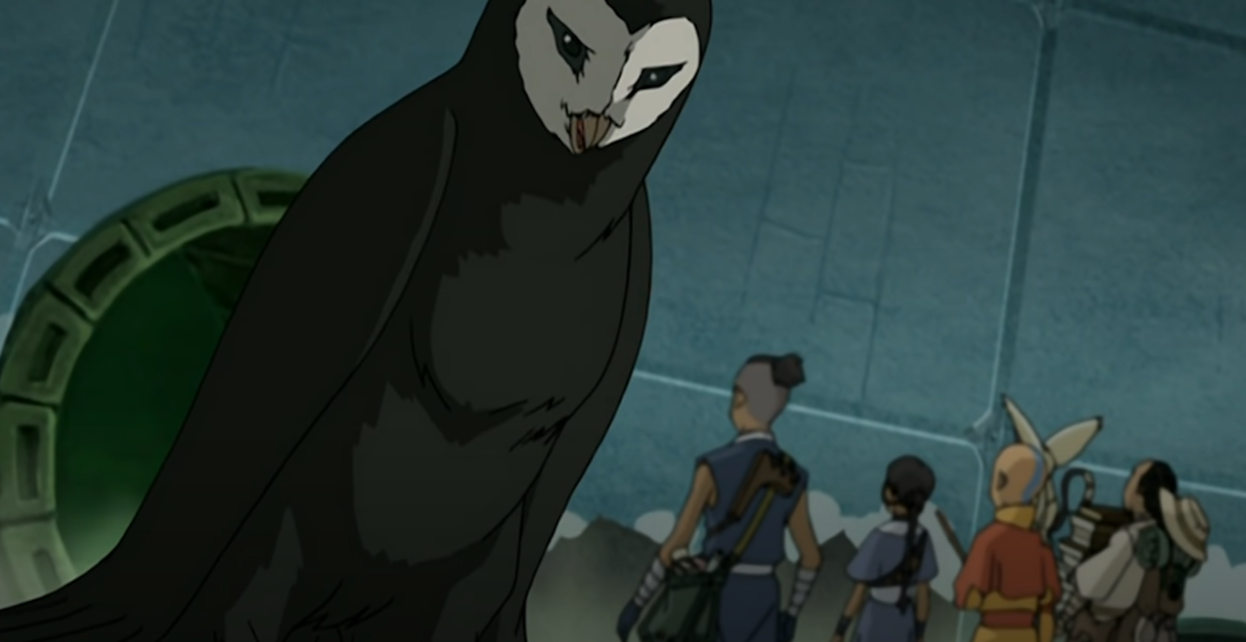
Avatar: The Last Airbender, Wan Shi Tong and the library
The intel they learned was the exact date of the next solar eclipse – a celestial event that dampened fire bending, leaving the Fire Nation vulnerable to attack. Though this intel was crucial, many may not realize how otherwise pivotal Wan Shi Tong was in pointing Aang in the right direction.
Wang Shi Tong is a spirit in the form of a giant owl, shrewd and ominous as he guards the library in the desert when Aang and his friends come seeking information. Their price of entry as he loomed over them, apart from offering him things of knowledge, was a promise that they’d use their research only for peaceful purposes.
But when the centuries-old spirit overheard them and realized that they were trying to gain the upper hand in a war, he flew into a violent rage, bellowing as they tried to explain themselves, “You think you’re the first person to think their war is justified!?” And he began to sink the library with them in it so that no one else could use it for evil. They barely escaped alive.
Despite Wan Shi Tong’s actions, in retrospect, he inadvertently pointed the GAang in the right direction by first challenging their motivations.
Aang and his friends tried to explain that they were fighting to save their loved ones, as is often a motivation for someone on any side of a war. It is harder however to show when your intentions are for peace or for power. And even so, they had seen and experienced for themselves already that the consequences of war are indiscriminate to intention.
You wouldn't think that challenging the pure motivations of a bunch of displaced youth would make sense to do, but it caused them to be more introspective, which in turn, helped them make better decisions.
Up until this point in the library, the GAng had been focusing on getting the proper training for Aang to defeat Ozai. And it was ironic that ending the 100-year war meant a pre-teen monk who respected all living creatures had to kill a man. Even if that man was a tyrannical leader of a colonizing nation, who came from a line of Fire Lords that wiped out Aang’s civilization.
Aang’s eventual decision in the show’s finale showed that he was both loyal to his heritage and willing to open himself to the influence of others while owning his actions. He chose to take away Ozai's bending, toppling the Fire Lord instead of killing him.
Ah, but Mace Windu would of course echo, "He's too dangerous to be left alive!" And here we find that there is often no singular solution to a complex problem.
After this point in the library, the GAang's worlds widened to include perspectives from people of different nations, later including Fire Nation citizens themselves.
Defeating the Fire Lord would change things, but not for too long if his teenage daughter and groomed protégé Azula, or others like them, would ascend the throne.
The GAang realized that even though they needed to be precise and swift in their aim, they also needed the end to make room for a new beginning.
This heavily influenced Aang’s allyship with Prince Zuko, who, though the son of their tyrannical enemy, was already challenging Ozai’s ideals and was willing to take on the leadership responsibility of a nation indoctrinated for generations. Aang continued to support him as Zuko set about creating a far different legacy from his father’s.
In grasping the potential impact his decisions would make, Aang also learnt something else from his interaction with Wan Shi Tong. And this was how to rely on himself and others.
This is demonstrated often by how the GAang work together, especially here when Wan Shi Tong was submerging the library below the depths of the desert. They would not have succeeded in the mission and come out alive had it not been for Sokka taking the risk to continue operating the planetarium to find the exact date of the eclipse, Katara drawing Wan Shi Tong's onslaught of attacks away, and Toph challenging the power of a spirit by holding up the sinking library long enough for them to escape.
It almost mirrored how they operated in the finale, Aang defeating Ozai, Zuko and Katara subduing Azula, and Sokka, Toph, Suki and the militia taking down the Fire Nation armada.
In a way, the astute but volatile Wan Shi Tong taught Aang that while he needed to take personal responsibility, he can accept support for it, while he supported others to take their responsibilities as well. his is a hard lesson to learn even for adults. After all, they were a bunch of teenagers who ended the hundred-year war. Brave, but teenagers all the same.
This article contains no text pictures to ensure that every word can be read aloud by a text-to-speech application. And was tested using Google Chrome’s “Read Aloud” add-on.
Tiffany Persaud is a freelance writer who has written for clients and organizations in Canada and the USA, on topics ranging from books, films and media, to health and employment skills.
Want a writer to suit your business needs? Book me for more information. Rates apply.
Want to have Tiffany Persaud's posts delivered right to your inbox?

Share Post